The SnapTrack Cinerails Dolly System is a portable camera rail setup that uses standard PVC pipes to create a smooth track for video shots. Its biggest selling point? It offers long, customizable dolly movements at a fraction of the cost of traditional gear, which makes it a fantastic option for filmmakers on a tight budget.
So, you need a smooth, professional-looking dolly shot for your next video project, but the pro-level equipment is crazy expensive and heavy. Renting a full dolly and track can eat up your entire budget, while most affordable sliders are just too short for those dramatic, long-panning shots. It’s a classic problem for independent creators. The SnapTrack Cinerails kit was designed to solve this exact issue, and I wanted to see how this clever, decade-old idea holds up against modern alternatives.
What is the SnapTrack Cinerails Dolly System and how does it work?
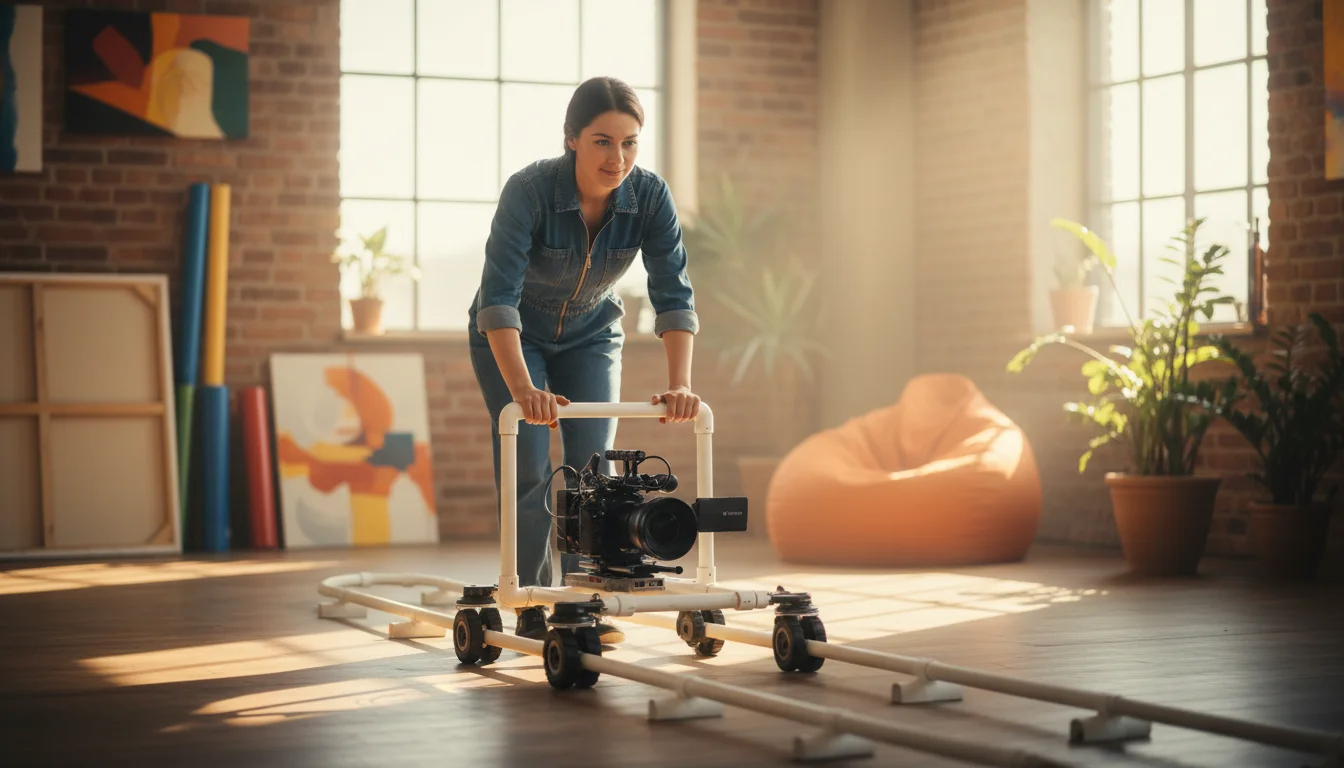
At its heart, the SnapTrack Cinerails is a modular and super portable camera movement tool for creating smooth tracking shots. A camera dolly is basically a wheeled cart for your camera, and this setup simplifies the concept by using materials you can find anywhere. The core of the kit is the dolly platform itself, which has wheels designed to run on a track. But instead of giving you heavy, proprietary rails, the kit includes cross-rail supports that snap onto standard 3/4-inch PVC pipes. You can grab those for a few bucks at any hardware store.
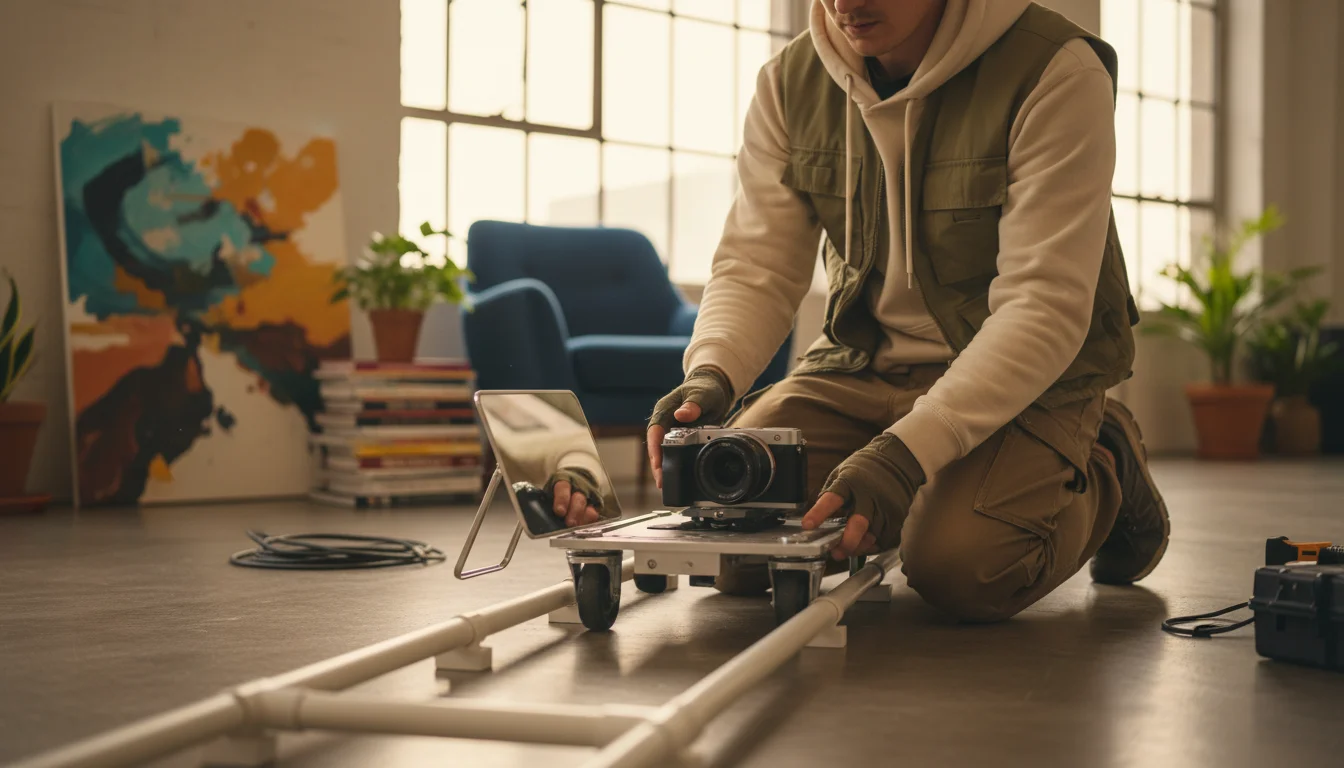
Setting it up is pretty straightforward. You just lay two long PVC pipes parallel to each other on a flat surface. Then, you snap the seven included cross rails onto the pipes, and you’ve got a stable, ladder-like track. Simple as that. The dolly platform goes on top, letting your camera glide smoothly. On top of that, the kit includes a drawstring and ratchet mechanism that lets you bend the flexible PVC track into a gentle curve. This means you can create arcing shots—a feature you almost never find in budget sliders.
What are the key features and specifications of the SnapTrack Cinerails Dolly?
The feature that really defines the SnapTrack kit is its mix of portability and adaptability. Because it relies on PVC pipes you supply yourself, the core kit is tiny enough to fit into a carry-on suitcase and weighs less than ten pounds. For filmmakers who travel for shoots, this is a huge plus.
Key specifications include:
- Load Capacity: The dolly can support a camera rig weighing up to 20 pounds, which is more than enough for most DSLR or mirrorless cameras with standard lenses.
- Track Material: It’s designed for standard 3/4-inch PVC pipes. They’re cheap, lightweight, and easy to replace if one gets lost or damaged on location.
- Portability: The entire kit (minus the pipes, of course) is compact and lightweight, making it one of the most portable long-track options out there.
- Customization: You can create a track of almost any length just by buying longer PVC pipes. While an 8-foot track is common, a 10-foot or even longer track is totally achievable.
- Curved Tracks: The included drawstring allows you to create arced dolly shots, offering a lot more creative flexibility than a simple straight slider.
Here’s something the manual won’t tell you, but my experience confirms: the reliance on common materials is its greatest strength. Imagine a piece of your track breaks on location. With this kit, a quick trip to a local hardware store gets you back in business for under $5. That’s a massive advantage over proprietary systems where a replacement could cost a fortune and take days to arrive.
What are the real-world pros and cons of using the SnapTrack Cinerails Dolly?
Let’s be honest, no piece of gear is perfect. The SnapTrack has a clear set of advantages and limitations. Its strengths are all about saving you money and being easy to travel with, while its weaknesses come from its very simple design.
Pros:
- Affordability: With an original price around $349, it gave you an 8-foot sliding dolly for way less than professional systems or even some high-end 4-foot sliders.
- Portability: Sourcing pipes locally makes it a dream for travel. You can fly with just the small dolly kit and grab the bulky rails when you get to your destination.
- Quick Setup: Once you get the hang of it, the track can be assembled or taken apart in just a few minutes.
- Flexible Length: Unlike sliders with a fixed length, you can make your track as long as you need for a particular shot.
Cons:
- Requires Flat Ground: This is the big catch. The setup has no built-in legs or supports, so it must be laid directly on a smooth, level surface. It’s completely useless on uneven terrain like grass or gravel where a tripod-mounted slider would work just fine.
- Drawstring Mechanism: The ratchet and drawstring for making curved tracks can be a bit finicky and tricky to get perfectly smooth.
- Original Aesthetics: I remember the pre-production models used white PVC pipes, which looked pretty unprofessional on set. Though production models featured black-coated cross rails, the pipes themselves still need a coat of paint if you want a low-key look.
- Limited Mounting: The base model didn’t have a center thread for mounting a low-angle tripod head, which limits some creative compositions.
How does SnapTrack compare to modern portable camera dolly alternatives?
When the SnapTrack first launched, the competition was either heavy, expensive dollies or very short sliders. The market is much more crowded today. So how does it stack up? Modern alternatives include carbon fiber sliders, compact motorized dollies, and all sorts of small wheeled platforms.
Compared to a modern slider from a brand like Neewer or GVM, the SnapTrack offers a much longer track for a similar price. Most sliders under $400 are only 3 to 4 feet long, while the SnapTrack easily gives you an 8-foot or longer path. Modern sliders, however, can be mounted on tripods, giving them the versatility to work on any terrain and at any height. The process of choosing a camera dolly often boils down to this trade-off: track length versus terrain flexibility.
Then you have motorized options like the YC Onion Hot Dog Slider, which offer automated, repeatable movements that the manual SnapTrack just can’t match. Still, those systems are often shorter and more expensive. The SnapTrack remains unique in its specific niche: providing an incredibly long, manually operated track for a low cost, provided you have a flat surface to work on.
Is the SnapTrack Cinerails Dolly System still a viable option for filmmakers today?
So, should you even consider the SnapTrack today? My answer is yes, but only for a specific type of filmmaker. Its relevance has definitely narrowed, but it hasn’t disappeared. For creators who mostly shoot indoors on smooth floors or outdoors on prepared surfaces like concrete, it’s still one of the cheapest ways to get long, cinematic tracking shots.
A common mistake I see is filmmakers buying gear that doesn’t fit their most common shooting environment. If you’re a run-and-gun videographer who’s often on unpredictable terrain, a modern tripod-mounted slider is a much better investment. But if you’re a student, an indie filmmaker, or a YouTuber shooting in controlled spaces, the SnapTrack provides production value that is tough to beat for the price.
Consider this scenario: a small e-commerce business in Chicago wanted to create professional product videos for their new line of furniture. They needed long, elegant sliding shots to showcase the pieces in their studio, which had a smooth concrete floor. Instead of renting a professional dolly for over $200 per day, they bought a used SnapTrack system for $150 and spent $25 on 10-foot PVC pipes. They were able to get all the shots they needed over a weekend, and the total cost was less than a single day’s rental. The result was a polished commercial that significantly boosted their online sales. If your product videos include on-screen text, you may also find our Copyfish OCR review useful for extracting that content.
Look, the SnapTrack Cinerails Dolly System is a specialized tool. While it’s dated in some ways, it still offers tremendous value if you’re in the right situation. It’s not a do-it-all solution, but it nails its core purpose: providing long, smooth dolly shots on a budget. Before you buy, think hard about your typical shooting locations. If you consistently have access to flat surfaces, this old-school camera rail kit could be a smart and affordable addition to your filmmaking gear. And for post-production touch-ups, check out our guide to the best photo editing software for beginners.
FAQ
Can I use the SnapTrack on grass or uneven ground?
Definitely not. The SnapTrack has to lie directly on a flat, smooth surface like a floor or pavement to work. It has no legs, so uneven terrain is a no-go.
How much weight can the SnapTrack dolly hold?
It can handle a camera setup up to 20 pounds. That’s more than enough for most DSLR or mirrorless cameras with a standard lens.
Is the SnapTrack fast to set up?
Yes, it’s super quick. Once you’ve done it once, you can assemble the whole track in just a couple of minutes by snapping the rails onto the pipes.
Does the SnapTrack come with the PVC pipes?
Nope, you have to buy the PVC pipes yourself from any hardware store. The upside is you can get them in whatever length you need for your project.
Compress images without losing quality